Case 008New case file:The Alcatraz Escape of 1962
Case file 009 · Historical Mysteries

The Voynich Manuscript

Voynich Manuscript • 1404

240 pages. Not one word read.

Has Anyone Read the Book No One Can Read?

  1. 01Open the folder and read the briefing.
  2. 02Read the journal. Every chapter logs new evidence.
  3. 03Declassify the plot twists.
  4. 04Work the board, pick a theory and file your verdict.
NIMZO STORIES · CASE BRIEFINGFile no. 009 — full investigation
Date
Vellum dated 1404–1438
Status
Undeciphered
Location
Beinecke Library, Yale University (MS 408)
Subjects
Wilfrid Voynich, Georg Baresch, Jan Marek Marci, Athanasius Kircher

A small illustrated book, written in an unknown script on fifteenth-century vellum, full of plants no botanist can name, star charts and bathing women. Codebreakers, linguists and computers have tried for more than a century. Nobody has read it.

UndecipheredStart reading
The journal

What happened

Read it like a field journal. Each chapter logs evidence onto the board, and the plot twists stay redacted until you declassify them.

Chapter 01 / 04The Voynich Manuscript

What is in the book

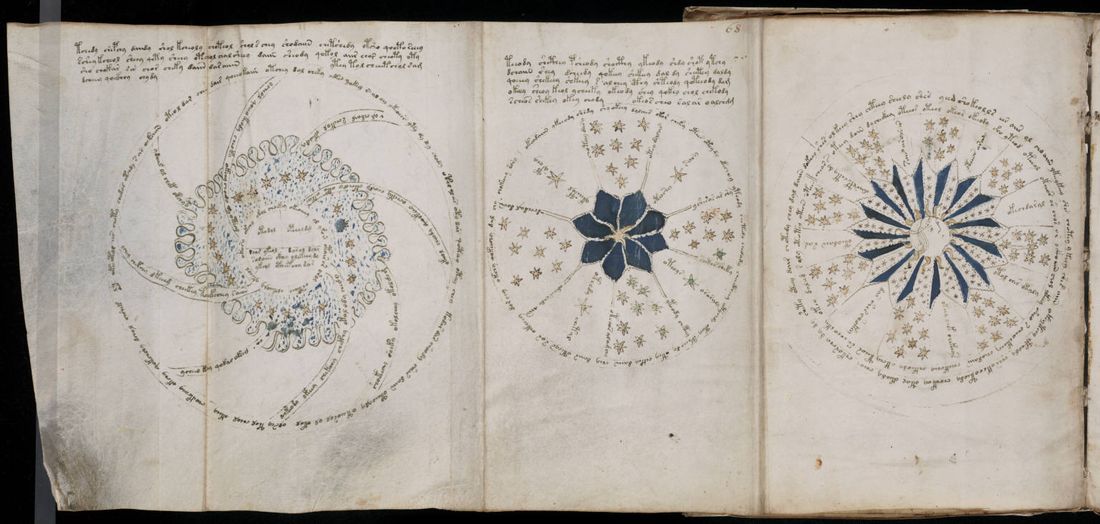
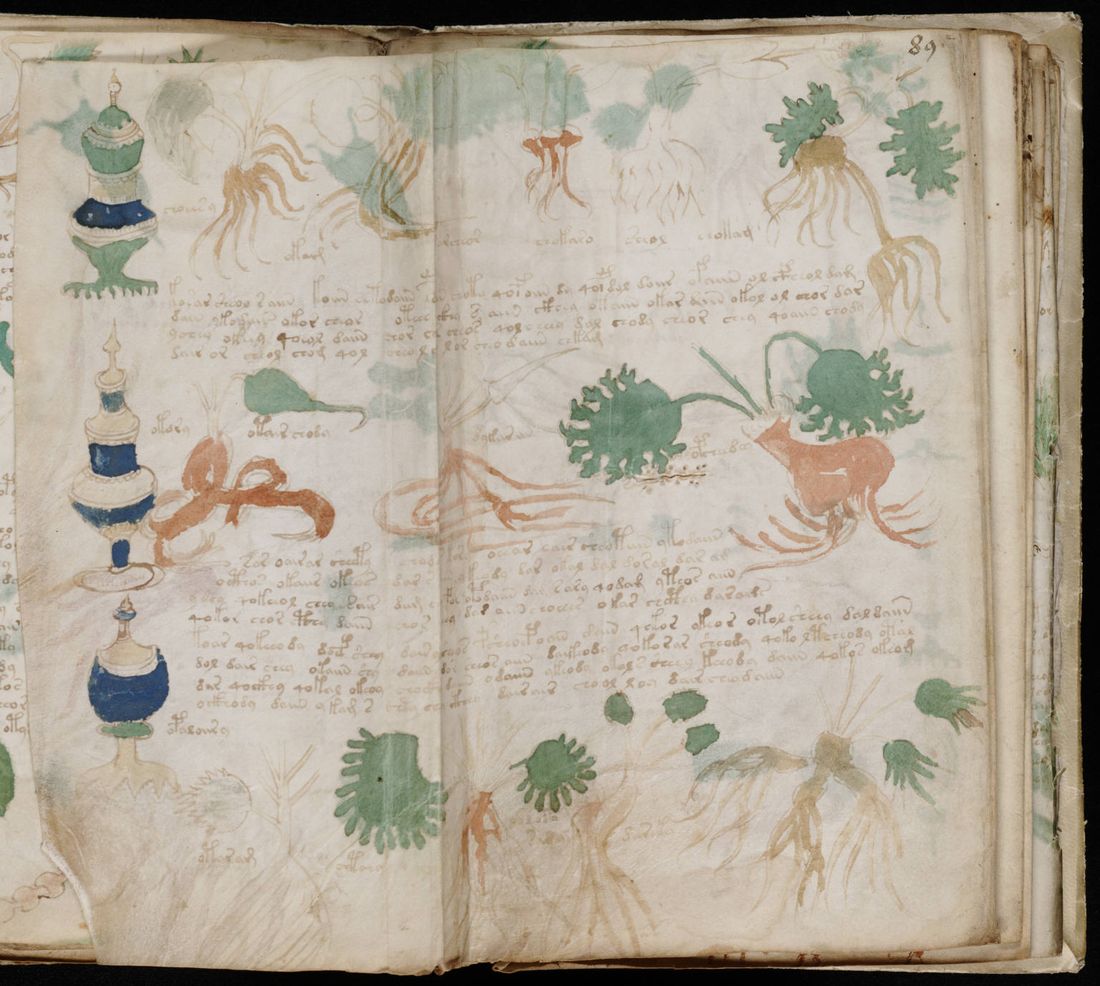
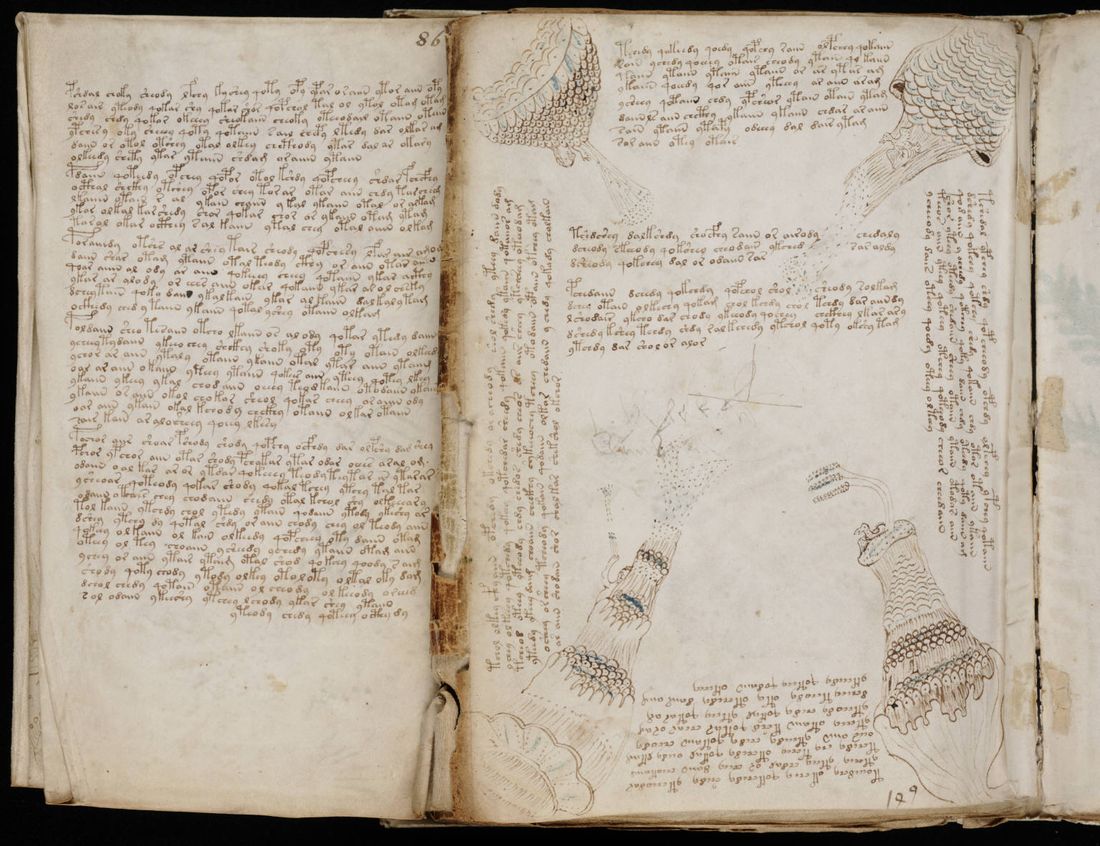
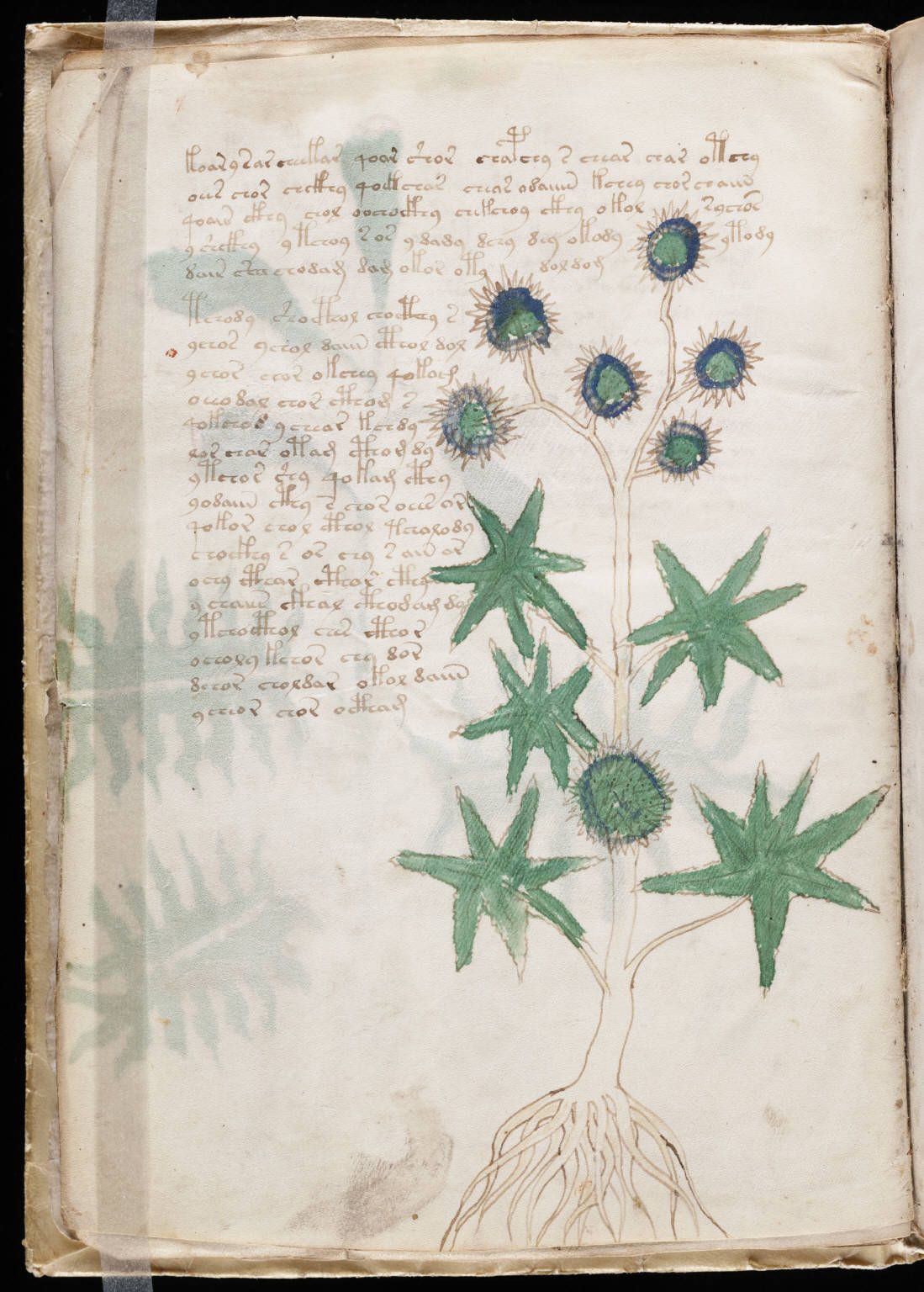
Scholars divide the manuscript into sections by its pictures. The largest, the herbal section, shows plants with roots, leaves and flowers, most of which cannot be matched to real species. There are astronomical and cosmological diagrams, including circles of stars and zodiac-like figures, a “balneological” section of small nude women in pools and tubes, pages of jars and plant parts that look pharmaceutical, and a final section of short paragraphs marked with stars, sometimes called recipes.

Some pages fold out. At least 14 leaves are missing, so the book we have is incomplete.
Chapter 02 / 04The Voynich Manuscript

How old it is

In 2009 researchers at the University of Arizona radiocarbon-dated samples of the vellum to between 1404 and 1438. Tests later confirmed it is calfskin and that it was not scraped and reused. The ink could have been applied later than the skin was prepared, but most researchers think the book was written in the early fifteenth century.

Plot twist 01

Voynich thought it was 200 years older

Wilfrid Voynich promoted the book as the work of Roger Bacon, the 13th-century English friar. Bacon died in 1292. The radiocarbon date of 1404–1438 makes that impossible, and with it a century of theories built on Bacon.

Chapter 03 / 04The Voynich Manuscript

The trail of owners

The earliest confirmed owner is Georg Baresch, a seventeenth-century alchemist in Prague, who wrote to the Jesuit scholar Athanasius Kircher in Rome in 1639 asking for help reading it. After Baresch's death the book passed to the physician Jan Marek Marci, who sent it to Kircher with a letter dated 1665 or 1666. That letter repeats a story that the Holy Roman Emperor Rudolf II had once paid 600 ducats for it. No record of that purchase has been found.

The book then disappeared into Jesuit libraries for about two centuries, until Voynich bought it in 1912 from a Jesuit collection kept at the Villa Mondragone near Rome.

Plot twist 02

A name was hidden on the first page

Under ultraviolet light, a faint, erased signature on folio 1 can be read: Jacobus Horčický de Tepenec, a chemist at Emperor Rudolf II's court. It is the strongest hint that the book really passed through Rudolf's hands.

Chapter 04 / 04The Voynich Manuscript

A century of attempts

The American codebreaker William Friedman and his teams worked on it for years without success. In 2019 a widely reported claim that it was written in a “proto-Romance” language was rejected by medieval specialists.

Statistical studies show that the text behaves in some ways like a natural language: word frequencies follow the same pattern as real languages. In other ways it is odd. It is unusually repetitive, and some words repeat two or three times in a row.

After Voynich's death the book passed through his wife Ethel and her friend Anne Nill to the dealer Hans P. Kraus, who could not sell it and donated it to Yale in 1969. It is now Beinecke MS 408, and the whole manuscript can be viewed online.

Plot twist 03

The hidden micro-writing was cracked ink

In 1921 William Newbold announced that tiny Greek-style shorthand was hidden inside the letters. Under magnification the marks turned out to be cracks in the drying ink. The most famous solution of its day was an illusion.

Timeline

Follow the thread

The calfskin vellum is made, according to radiocarbon dating.

A later story claims Emperor Rudolf II bought the book for 600 ducats. It is unconfirmed.

Georg Baresch writes to Athanasius Kircher: the earliest confirmed mention.

Jan Marek Marci sends the book to Kircher in Rome.

Wilfrid Voynich buys it from a Jesuit collection near Rome.

William Newbold's claimed decipherment is later disproved.

Hans P. Kraus donates it to Yale's Beinecke Library.

The University of Arizona radiocarbon-dates the vellum.

A “proto-Romance” solution is widely reported, then rejected by specialists.

Yale describes the script as still untranslated.

Evidence board

Work the board

Drag the photos around. Tap one to examine it. Then pick a theory: the threads show which evidence it rests on.

Your theoryPick one to start
The herbal pagesOriginal manuscriptExamined
The scriptOriginal manuscriptExamined
Circles within circlesOriginal manuscriptExamined
Jars and plant partsOriginal manuscriptExamined
Radiocarbon dateScientificExamined
Marci's 1665/66 letterDocumentedExamined

Which explanation do you believe? Each is labelled by how well it's supported.

Unanswered

Still open

Does the text encode a known language, a made-up one, or nothing at all?
Who wrote it, and why would anyone spend so much vellum on a book no one could read?
Are the plants real, but drawn from memory or in a lost tradition?
What was on the missing pages?
Appendix A

Questions readers ask

Has the Voynich manuscript been deciphered?

No. As of this update, no proposed decipherment has been accepted by specialists. Claims appear regularly but have not held up.

How old is the Voynich manuscript?

Its vellum was radiocarbon-dated to between 1404 and 1438. Most researchers believe it was written soon after.

Where can I see the Voynich manuscript?

It is held by the Beinecke Rare Book & Manuscript Library at Yale as MS 408. The entire book has been digitised and can be viewed free online.

Appendix B

Sources

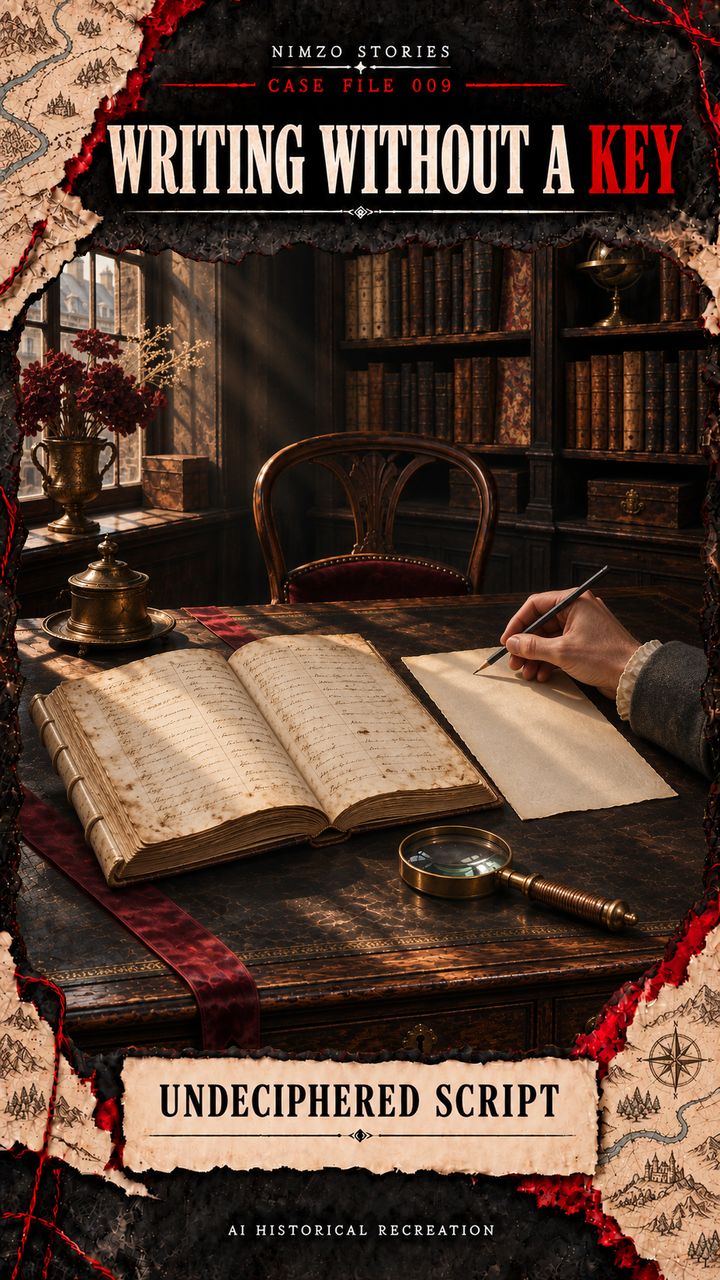
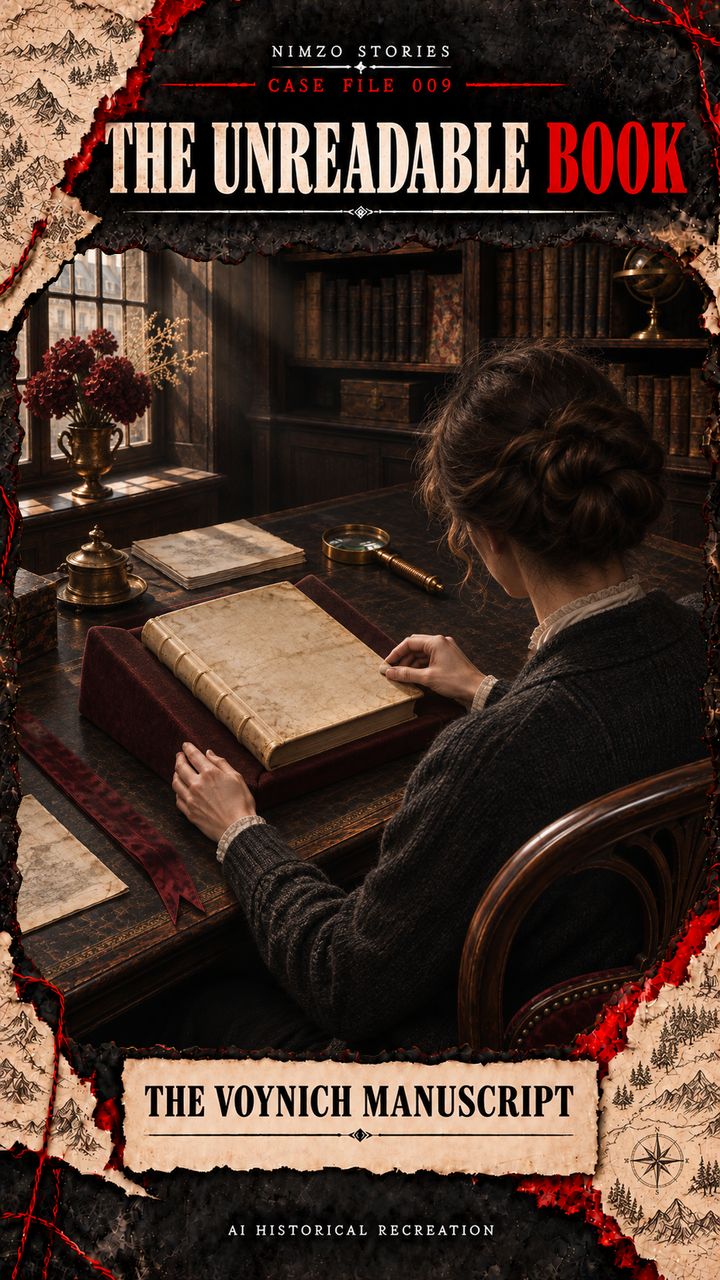
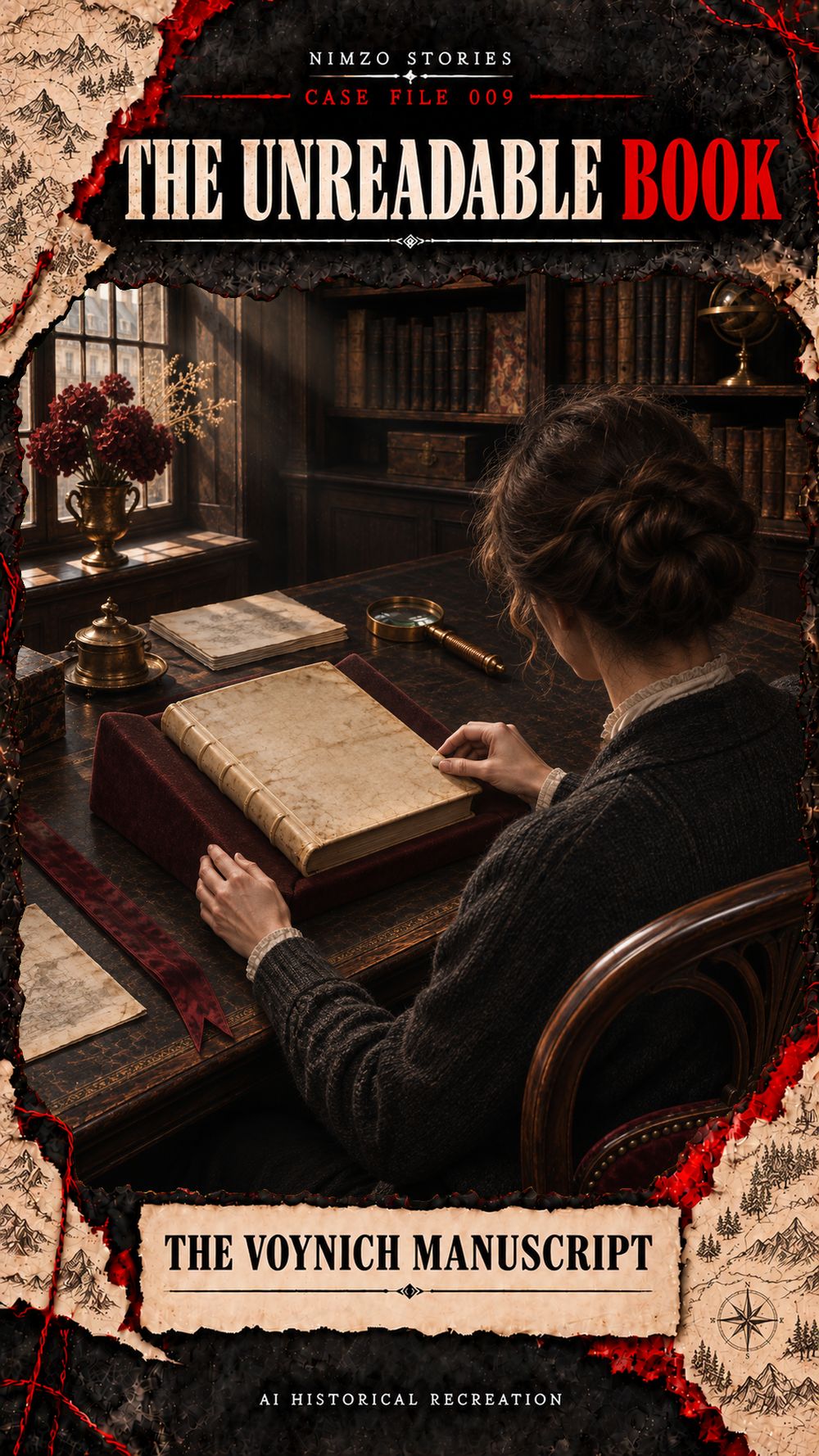
Images marked "AI historical recreation" are illustrations made for Nimzo Stories, not photographs. Pages marked “Original” are scans of Beinecke MS 408, Yale University.
CASE 009 Evidence0/6 Twists0/3

Theories that use this