
Case 008New case file:The Alcatraz Escape of 1962
Case file 007 · True Crime

The Isdal Woman

Isdal Woman • 1970

Seven names. No identity.

Who Was the Woman Found in Ice Valley?

  1. 01Open the folder and read the briefing.
  2. 02Read the journal. Every chapter logs new evidence.
  3. 03Declassify the plot twists.
  4. 04Work the board, pick a theory and file your verdict.
NIMZO STORIES · CASE BRIEFINGFile no. 007 — full investigation
Date
29 November 1970
Status
Unidentified
Location
Isdalen (“Ice Valley”), Bergen, Norway
Subjects
An unidentified woman who used at least seven names

Hikers found a woman's burned body in a valley outside Bergen. Every label had been cut from her clothes. Her luggage held wigs, coded notes and passports' worth of false names. More than fifty years later, no one knows who she was.

Still unidentifiedStart reading
The journal

What happened

Read it like a field journal. Each chapter logs evidence onto the board, and the plot twists stay redacted until you declassify them.

Chapter 01 / 05The Isdal Woman

A body in the scree

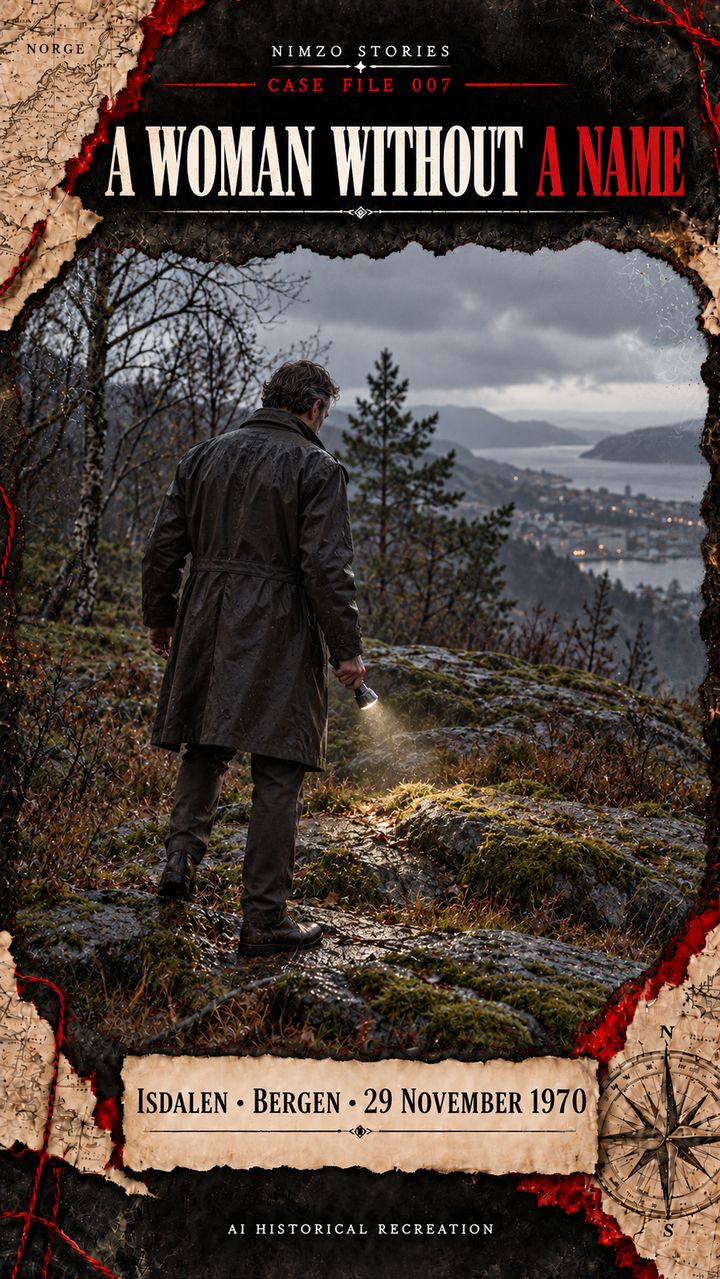
The woman lay on her back in a remote part of Isdalen, the valley locals had long called Death Valley. The front of her body and clothing were badly burned and her face was unrecognisable. Nearby were the remains of a fire.

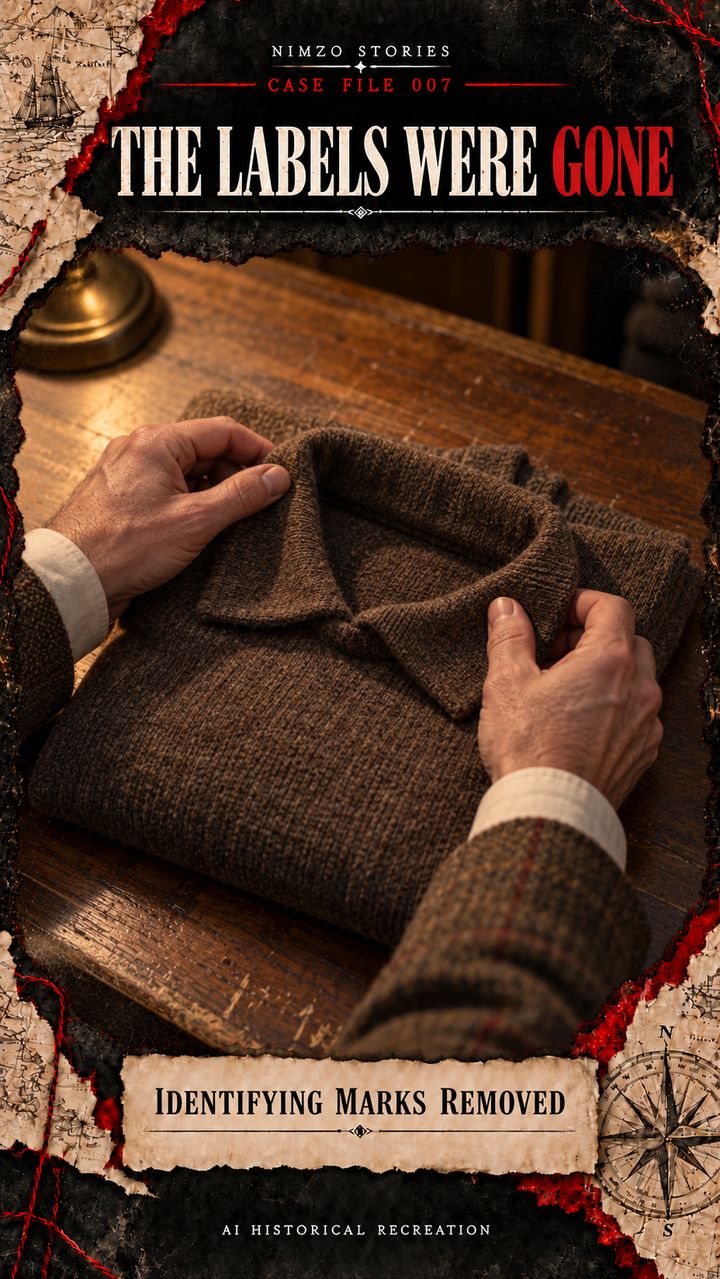
Around her investigators found an empty bottle of St. Hallvard liqueur, two plastic water bottles, a passport holder with no passport, rubber boots, a woollen jumper, a scarf, nylon stockings, an umbrella, a purse, a matchbox, a watch, two earrings and a ring. A fur hat beneath her smelled of petrol. Every label and maker's mark had been cut or rubbed away.
Chapter 02 / 05The Isdal Woman

Two suitcases at Bergen station

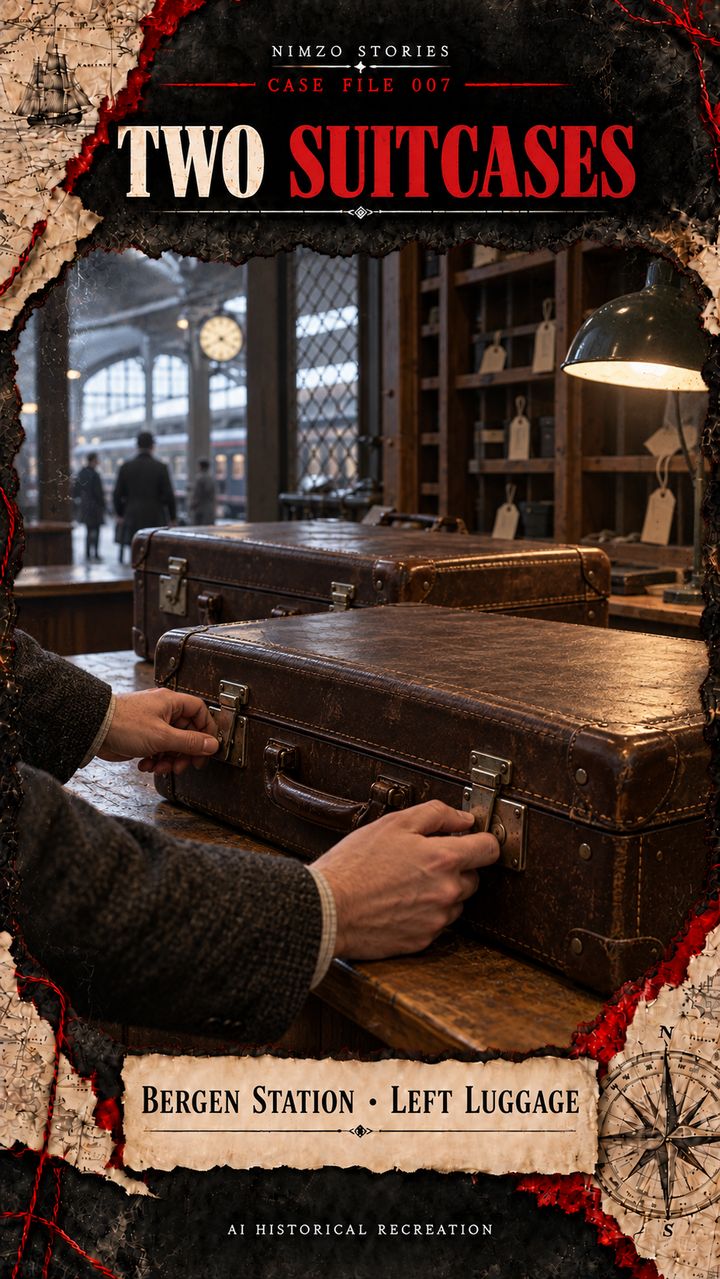
Three days later police traced two suitcases she had left at the left-luggage office of Bergen railway station. Inside were clothes, shoes, wigs, make-up, eczema cream with its label removed, coins from several countries, maps and timetables, a pair of glasses with plain lenses, sunglasses bearing her partial fingerprints, and a notepad. Five 100 Deutsche Mark notes were hidden in the lining of one case.

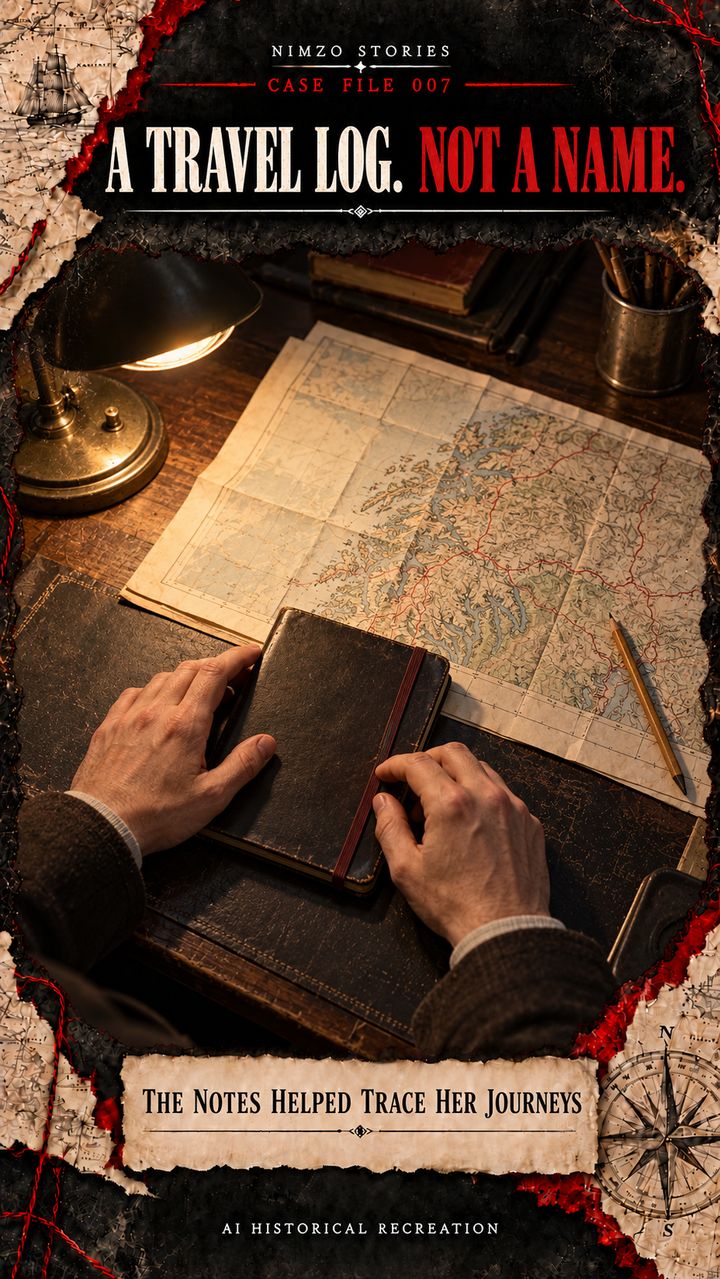
The notepad was filled with short entries of letters and numbers. To the detectives it looked like a code.

Plot twist 01

The code was a travel diary

Police cracked the notepad. The entries were dates and the first letters of places, and they matched where she had been. The woman who hid every label had kept a careful record of her own movements.

Chapter 03 / 05The Isdal Woman

Many names, one woman

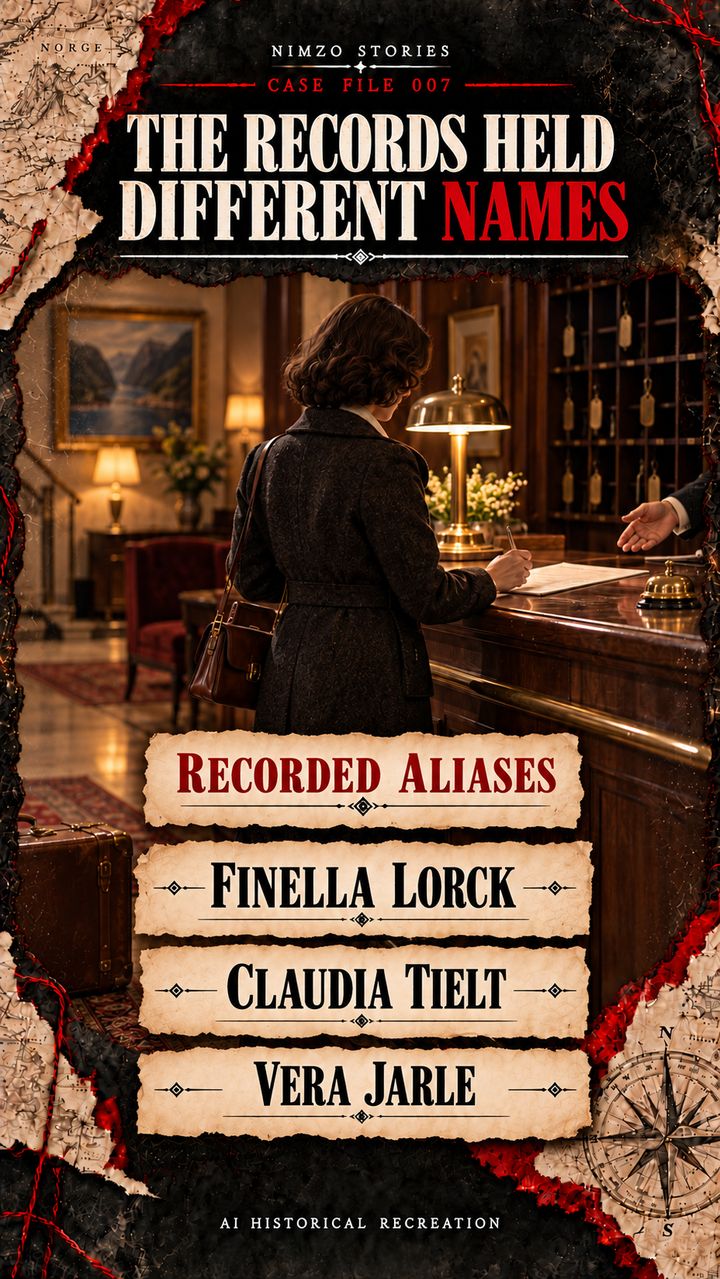
Detectives checked hotel registers across Norway and found the same woman again and again. She had stayed in Oslo, Trondheim, Stavanger and Bergen, and had also travelled to Paris. She always gave Belgian nationality, filled in forms in German or French, and used a different name almost every time: Geneviève Lancier, Claudia Tielt, Claudia Nielsen, Alexia Zarne-Merchez, Vera Jarle, Fenella Lorck and Elisabeth Leenhouwer. Almost all the addresses she gave were false.

Staff remembered a good-looking woman of about 1.63 metres with dark brown hair, who kept to her room, sometimes asked to change rooms, and said she was a travelling saleswoman or antiques dealer. She was last seen on 23 November 1970, checking out of room 407 at the Hotel Hordaheimen in Bergen, paying cash and asking for a taxi.

Plot twist 02

A witness came forward 35 years later

In 2005 a Bergen man said that, days before the body was found, he had seen a lightly dressed woman matching her description on a hillside, walking ahead of two men in coats. He said police told him at the time to forget it. The claim cannot now be tested.

Chapter 04 / 05The Isdal Woman

How she died

The autopsy found that she had taken between 50 and 70 Fenemal sleeping tablets, and soot in her lungs showed she was still alive while she burned. The cause of death was given as phenobarbital poisoning combined with carbon monoxide. There was a bruise on her neck that could have come from a fall or a blow.

Police concluded she had most likely taken her own life. The case was closed without a name. On 5 February 1971 she was buried in an unmarked grave at Møllendal cemetery under Catholic rites, attended by police officers who photographed the service in case relatives ever came forward.

Chapter 05 / 05The Isdal Woman

New science, old questions

In 2016 the case was reopened. NRK and the BBC World Service investigated it together for the podcast Death in Ice Valley. In 2017, isotope analysis of her teeth suggested she was born around 1930 near Nuremberg in Germany and moved toward France or the French–German border as a child. Her handwriting also pointed to a French-style education. Everything she had told hotels about herself, it seemed, was cover.

Plot twist 03

Her travels matched secret missile tests

Declassified Norwegian military files show some of her movements coincided with trials of the Penguin missile, including near Stavanger, where a fisherman reported seeing her. The overlap is documented. What it means is not.

Timeline

Follow the thread

Hotel records show a woman travelling through Oslo, Trondheim, Stavanger, Bergen and Paris under different names.

She checks out of room 407 at the Hotel Hordaheimen, Bergen, pays cash and asks for a taxi.

A man and his two daughters find her burned body in Isdalen.

Police find her two suitcases at Bergen railway station.

The autopsy finds 50–70 sleeping pills and carbon monoxide poisoning.

She is buried, unnamed, at Møllendal cemetery.

The case is reopened. NRK and the BBC begin a joint investigation.

Isotope analysis of her teeth points to birth around 1930 near Nuremberg.

Death in Ice Valley brings new tips and candidate identities. None is confirmed.

Evidence board

Work the board

Drag the photos around. Tap one to examine it. Then pick a theory: the threads show which evidence it rests on.

Your theoryPick one to start
The two suitcasesDocumentedExamined
Labels removedDocumentedExamined
The coded notepadDocumentedExamined
At least seven aliasesDocumentedExamined
The scene in IsdalenDocumentedExamined
Her teethScientificExamined

Which explanation do you believe? Each is labelled by how well it's supported.

Unanswered

Still open

Why would someone planning suicide remove every label, and travel under so many names first?
Who was the man witnesses heard her speaking German with in a Bergen hotel?
Why did the taxi driver who took her from the Hotel Hordaheimen never come forward at the time?
Is the overlap with Penguin missile testing meaningful, or a coincidence found in hindsight?
Who, in 1970, would have known her by her real name?
Appendix A

Questions readers ask

What was found in the Isdal Woman's suitcases?

Clothes and shoes with the labels removed, several wigs, make-up, eczema cream, non-prescription glasses, sunglasses with her fingerprints, maps, timetables, coins from several countries, a coded notepad and 500 Deutsche Marks sewn into the lining.

How did the Isdal Woman die?

The autopsy found she had taken 50 to 70 Fenemal sleeping pills and died from a combination of phenobarbital and carbon monoxide poisoning while burning. Police concluded it was probably suicide.

Has the Isdal Woman been identified?

No. As of this update, isotope and DNA work has narrowed down where she may have been born and raised, but she has not been named.

What did the Isdal Woman's code say?

Police decoded it as a list of dates and places, essentially a travel diary. It matched her known movements.

Appendix B

Sources

Images marked "AI historical recreation" are illustrations made for Nimzo Stories, not photographs.
CASE 007 Evidence0/6 Twists0/3

Theories that use this